
Shop Best Intake Filters for Flawless Finishes
In the world of automotive and industrial finishing, a high-gloss, mirror-like surface is the pinnacle of quality. It represents precision, care, and an investment in excellence. However, achieving this level of perfection is a formidable challenge, where the greatest threat is often invisible. The quality of a high-gloss paint job is decided long before the first coat is applied; it begins with the air that fills the spray booth. In a rapidly growing global automotive refinish coating market, the difference between a flawless finish and a costly redo often comes down to one critical component: the intake air filter.
The Imperative of Purity: Why Intake Air is Critical for High-Gloss Finishes
The pursuit of a perfect finish is a battle fought on a microscopic level. The quality of the air entering the paint booth is not just a minor detail—it is the foundation upon which a flawless surface is built.
The Enemy of Gloss: Microscopic Contaminants
Even in a seemingly clean environment, ambient air is filled with microscopic particles: dust, pollen, lint, and industrial particulates. When these contaminants land on a wet, high-gloss surface, they create imperfections known as “nibs” or “fisheyes.” While barely noticeable on a matte finish, these tiny flaws are magnified on a reflective surface, shattering the mirror-like illusion and demanding hours of painstaking buffing or a complete repaint. The prevalence of such issues is significant, with some estimates suggesting that paint defects can affect 5% to 15% of vehicles in production, highlighting the need for stringent contamination control.
Beyond Clean Air: Achieving a “Mirror Finish”
A true mirror finish requires more than just the absence of visible dust. It demands a perfectly uniform and smooth paint application, which is directly influenced by the stability and purity of the airflow within the spray booth. Any turbulence or impurity can disrupt how paint droplets land and coalesce, leading to subtle textures that compromise the final gloss.
The Intake Filter’s Role as the First Line of Defense
Every filtration system within a paint booth has a purpose, but the intake filter is the gatekeeper. While exhaust filters capture paint overspray to protect the environment, the Media Intake Filter is solely responsible for purifying the enormous volume of air drawn into the booth. This air filter acts as the first and most crucial line of defense, ensuring that the controlled environment remains pristine from the start.
Understanding Intake Filter Technology for Superior Finishes
Not all intake filters are created equal. The technology, materials, and design of an air filter directly correlate to its ability to protect a high-gloss finish. Understanding these elements is key to making an informed choice.
More Than Just a Sieve: The Science of High-Efficiency Intake Filters
Modern intake filters are sophisticated filtration tools. They don’t just block particles; they are engineered to capture them. High-efficiency media uses a dense, intricate web of fibers to trap contaminants through methods like interception and diffusion. Many premium filters also incorporate a tackifier—a sticky adhesive applied to the filter media—which actively grabs and holds onto even the finest particles, preventing them from migrating through the filter over time.
Key Filter Media Types for Flawless Results
The choice of filter media is paramount. The most common and effective materials for high-gloss applications are synthetic, particularly polyester media. This type of fiber is known for its high tensile strength, durability, and resistance to moisture. Unlike fiberglass, polyester media is less prone to shedding fibers, which could themselves become contaminants. For the final stage of filtration, often at the ceiling, Diffusion Media is used. This specialized material is designed not only for high-efficiency particle capture but also to ensure a perfectly even, laminar airflow, which is essential for uniform paint application.
Design Matters: Panels, Self-Supported, and Link Filters
Intake filters come in various formats to fit different spray booths. Panel filters are rigid, self-contained units that are easy to install. Self-supported or pad-style filters offer flexibility and can be cut to size, while linked panels are designed to cover large intake areas without gaps. The best design ensures a perfect seal, eliminating any chance for contaminated air to bypass the filter media.
Key Performance Metrics: What to Look for in a High-Gloss Intake Filter
Selecting the right intake filter requires looking beyond the price tag and evaluating key performance metrics that directly impact its effectiveness in a high-gloss environment.
Filtration Efficiency: Capturing the Unseen
Efficiency ratings indicate a filter’s ability to capture particles of a specific size. For high-gloss work, you need a filter capable of capturing particles down to 5-10 microns and smaller. Look for high-arrestance filters, which measure the ability to remove larger, more visible particles, often exceeding 99% for quality polyester media.
Airflow and Air Velocity: The Breath of the Booth
A flawless finish depends on consistent, non-turbulent airflow. A high-quality intake filter must provide excellent filtration without overly restricting airflow. This balance ensures that the paint booth maintains the correct pressure and that paint overspray is effectively carried away from the painted surface towards the exhaust filters.
Initial Resistance: Balancing Performance and Longevity
Initial resistance measures how much the clean filter restricts airflow. A lower initial resistance is generally better, as it puts less strain on the booth’s fan system and consumes less energy. However, this must be balanced with filtration efficiency. A quality filter provides high particle capture with minimal initial resistance, loading evenly over its lifespan.
Durability and Integrity: Preventing Filter Media Bypass
The structural integrity of the filter is crucial. The filter media must be securely sealed to its frame to prevent “air bypass,” where contaminated air sneaks around the edges. A durable filter, often featuring a metal or moisture-resistant cardboard frame and robust media, will maintain its shape and sealing capacity throughout its service life.
Selecting the Best Intake Filters for Your Paint Booth
The ideal intake filter is not a one-size-fits-all solution. The selection process should account for the specific equipment, materials, and environmental conditions of your operation.
Matching Filters to Booth Type
Different spray booths have unique airflow designs. Downdraft booths, which pull air from a filtered ceiling, rely heavily on Ceiling Diffusion Media for final purification and laminar flow. Crossdraft booths pull air across the vehicle, requiring highly effective intake panels at one end. Always consult the booth manufacturer’s specifications for recommended filter types.
Considerations for Paint Type and Environmental Factors
The type of paint being used can influence filter choice. For example, waterborne paints can be more sensitive to airborne contaminants. Additionally, a shop located in a dusty, industrial area will require more robust pre-filtration and more frequent filter changes than one in a cleaner environment.
Strategic Integration with OEM Systems
For optimal performance, use filters that meet or exceed the original equipment manufacturer’s (OEM) specifications. OEM-approved filters are designed to work harmoniously with the booth’s specific airflow dynamics, fan capacity, and pressure balancing, ensuring the entire system functions as intended.
The Role of Pre-Filtration in Extending Life
A multi-stage filtration strategy is often most effective. Using a less expensive pre-filter to capture larger particles can significantly extend the life of the more expensive, high-efficiency primary intake filters. This protects your investment and maintains consistent air quality over a longer period.
Installation, Maintenance, and Monitoring for Sustained Flawless Finishes
The best Paint Booth Filters in the world will fail if they are not installed correctly and maintained diligently. A systematic approach is essential for consistent results.
Proper Installation: Sealing the Deal on Clean Air
Proper installation is non-negotiable. Ensure that filter panels are seated correctly in their frames and that gaskets create an airtight seal. Any gaps or loose fittings will allow unfiltered air to enter the booth, rendering the expensive filtration media useless.
The Critical Schedule of Filter Changes
Filters have a finite lifespan. As they capture contaminants, airflow becomes restricted. Adhering to a regular change schedule, based on manufacturer recommendations and usage hours, is critical. Waiting until a filter is visibly dirty is often too late; by then, performance has already degraded and finish quality has been compromised.
Monitoring Filter Performance
Many modern spray booths are equipped with a manometer or pressure gauge, which measures the pressure difference across the filters. An increase in pressure indicates that the filters are loaded and need replacement. Regularly monitoring these gauges provides a data-driven approach to filter maintenance.
Adherence to Safety and Compliance (Briefly)
Properly functioning filters, including both intake and exhaust filters, are also essential for operator safety and environmental compliance. They ensure a clean working environment and help control the release of volatile organic compounds (VOCs).
Investing in Perfection: The ROI of Premium Intake Filters
While premium intake filters may have a higher upfront cost, they provide a significant return on investment by preventing the far greater costs associated with poor-quality finishes. The growing industrial air filtration market underscores the industry-wide recognition of this value.
Reduced Rework and Buffing
The most immediate return is the dramatic reduction in finish defects. By eliminating contaminants at the source, premium filtration minimizes the need for time-consuming and labor-intensive buffing, polishing, and costly repaints.
Enhanced Reputation and Customer Satisfaction
Consistently delivering flawless, high-gloss paint jobs builds a reputation for quality and excellence. Satisfied customers are more likely to return and recommend your services, providing invaluable word-of-mouth marketing.
Protecting Your Investment: Paint Booth and Equipment Longevity
Clean intake air doesn’t just protect the paint job; it protects the paint booth itself. By preventing dust and debris from entering the system, high-quality filters reduce wear and tear on fan motors, belts, and other mechanical components, extending the life of your most critical equipment.
Conclusion: Your Gateway to Unrivaled High-Gloss Finishes
Achieving a truly flawless, high-gloss finish is an exacting science where control over the environment is paramount. While many factors contribute to the final result, the purification of intake air stands as the single most important preparatory step. It is the invisible foundation for a visible masterpiece.
Recap of Key Takeaways
The journey to a mirror finish begins with understanding that microscopic contaminants are the primary enemy. The intake filter is your first line of defense, and its effectiveness is determined by its media, design, and performance metrics. Selecting the right filters for your specific booth and processes, combined with rigorous installation and maintenance, is not an expense—it is a direct investment in quality, efficiency, and reputation. By prioritizing premium intake filtration, you are not just buying clean air; you are buying consistency, reducing rework, and securing your ability to deliver the unrivaled high-gloss finishes your customers demand.
 Spray Booth Filters Near Me: Fast Shipping & Sizing
  Different Types of Air Filter Roll Material Explained
 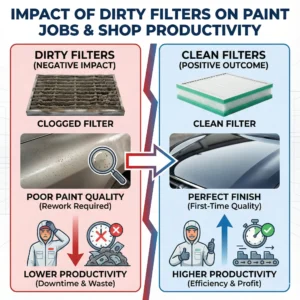 The Impact of Dirty Filters on Paint Jobs and Shop Productivity
 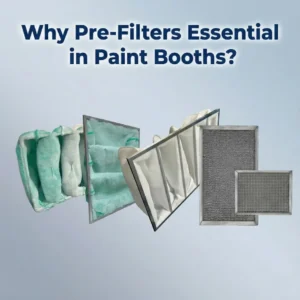 What Are Pre-Filters and Why Are They Essential in Paint Booths?
  How Paint Booth Filters Help Maintain OSHA and EPA Compliance