The Unseen Saboteur of Your Paint Booth
In the high-stakes world of industrial and automotive painting, achieving a flawless finish is paramount. Millions are invested in advanced spray technology, skilled technicians, and premium paint products. Yet, a simple, often-overlooked component can systematically sabotage these efforts: the humble air filter. A dirty filter is not just a maintenance item; it is an unseen saboteur, silently degrading paint quality, crippling shop productivity, and draining profits. As the paint booth filter market is projected to reach USD 1,200 million by 2033, driven by the demand for high-quality finishes, understanding the profound impact of filtration has never been more critical. This article delves into the cascading consequences of neglecting your paint booth’s air filtration system, revealing how a proactive maintenance strategy is one of the most powerful investments you can make in your business’s success.
The Critical Role of Air Filtration in Paint Booths
A paint booth is a precisely engineered environment designed to control variables and produce a perfect finish. At the heart of this control system is air filtration. Its role is twofold: on the intake side, filters remove dust, debris, and other contaminants from the incoming air to prevent them from landing on the wet paint surface. On the exhaust side, filters capture paint overspray, protecting the environment, ensuring regulatory compliance, and preventing the contamination of booth components like fans and ductwork. This dual system is designed to create a clean, balanced envelope of air that is essential for both quality and safety.
Beyond the Obvious: Why Dirty Filters are More Than a Nuisance
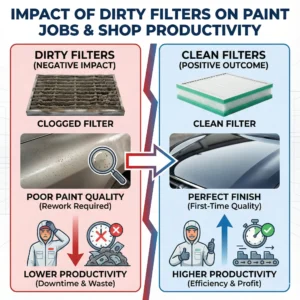
When filters become clogged with dust, paint particles, and debris, they transform from an asset into a liability. A dirty air filter is more than just an unsightly maintenance task; it is a fundamental disruption to the booth’s performance. It chokes the system, restricting the clean airflow necessary for a pristine paint job. This restriction initiates a chain reaction of negative effects that extend far beyond a few specks of dust, impacting everything from application quality and cure times to energy consumption and worker safety.
Unpacking the Hidden Costs and Crippled Productivity
The most immediate consequence of a dirty filter is a flawed paint job, but the financial damage runs much deeper. Shops often focus on the visible cost of rework—the labor and materials needed to fix a bad finish. However, the hidden costs are equally damaging: increased energy bills from overworked fans, extended cycle times that reduce shop throughput, premature wear on expensive equipment, and the significant risk of customer dissatisfaction. Ignoring filter maintenance is a decision that quietly erodes profitability from multiple angles.
The Direct Assault on Paint Job Quality: From Pristine to Problematic
The quality of a paint job is directly proportional to the quality of the air in the paint booth. Airflow acts as a quality conveyor belt, carrying away overspray and maintaining a clean environment for the paint to be applied and cured. When filters become clogged, this conveyor belt slows down dramatically. The reduced airflow fails to create the necessary air velocity to capture airborne contaminants, allowing dust, lint, and debris to circulate and settle onto the freshly painted surface. This compromised air quality is the primary source of nearly all contamination-related paint defects.
Specific Paint Job Defects Caused by Dirty Filters
Neglected air filtration manifests as a variety of costly paint defects that require significant rework. These include:
- Dust Nibs and Dirt: The most common issue, where airborne particles are trapped in the wet paint, creating a rough, unacceptable finish.
- Overspray Texturing: Insufficient exhaust airflow allows paint overspray to linger in the booth and settle back onto the surface, creating a gritty or textured appearance instead of a smooth, glossy finish.
- Mottling and Streaking: Inconsistent airflow can cause metallic and pearlescent paints to lay down unevenly, resulting in blotchy or striped patterns.
- Poor Adhesion: Contaminants like silicone or oil, which a clean intake filter would trap, can land on the substrate and prevent the paint from adhering properly, leading to peeling or flaking down the line.
The Link Between Clogged Filters and Contaminants: Dust, Paint Particles, and More
A clean filter is a barrier. A clogged filter, however, becomes a source of problems. As intake filters load with dust and debris, the increased air pressure can force smaller particles through the media and directly into the painting environment. On the exhaust side, overloaded filters can no longer effectively capture overspray. This leads to a “breakthrough” where paint particles are either released into the atmosphere, creating a compliance issue, or worse, they build up in the exhaust plenum and on fan blades. This buildup can later break off and be reintroduced into the booth, creating a cycle of self-contamination that is impossible to stop without proper maintenance.
Crippling Shop Productivity: Unmasking the True Financial Drain
Rework and Labor Costs: Paying for Mistakes, Not Progress
Every paint job defect caused by a dirty filter necessitates rework, which is a direct drain on profitability. It’s not just the cost of stripping, re-prepping, and respraying a panel; it’s the opportunity cost of the painter’s time and the booth’s cycle time. A single paint booth re-do can cost an average of $4,300 when factoring in labor, materials, and lost production capacity. This is money spent correcting a preventable mistake rather than generating new revenue, turning a profitable job into a significant loss.
Material Waste: Every Defect is Dollars Down the Drain
Rework consumes valuable materials, from sandpaper and masking supplies to primers, basecoats, and clearcoats. With paint and material costs in collision repair rising 7.4% in the first quarter of 2025, the financial impact of this waste is escalating. When a job has to be redone due to filter-related contamination, a shop effectively pays for the paint twice. This avoidable expense directly impacts the bottom line and makes it harder to remain competitive in a market with tightening margins.
Extended Cycle Times and Shop Downtime: The Efficiency Killer
Efficiency in a paint shop is measured by throughput—the number of vehicles or parts that can be processed in a day. Dirty filters are a major efficiency killer. Reduced airflow leads to longer flash-off times between coats and extended cure times, as solvent vapors are not evacuated effectively. This ties up the paint booth for longer than necessary, creating a bottleneck that slows down the entire repair process. The cumulative effect is fewer jobs completed per week, leading to decreased revenue and frustrated customers.
Energy Inefficiency: Powering Through Resistance
A paint booth’s fan motor is one of the largest energy consumers in a shop. When filters are clogged, the fan must work significantly harder to pull air through the restricted media, leading to a substantial increase in electricity consumption. This increased static pressure forces the motor to draw more amps to maintain airflow, driving up utility bills. A proactive filter replacement schedule is not just a maintenance task; it’s an energy efficiency strategy that yields tangible cost savings month after month.
Premature Equipment Wear and Tear
The strain placed on a paint booth’s ventilation system by dirty filters accelerates wear and tear on critical components. Fan motors running under constant high load are more prone to overheating and premature failure. Bearings can wear out faster, and the entire system can be subjected to damaging vibrations. Furthermore, overspray that bypasses clogged exhaust filters can coat fan blades, creating an imbalance that can lead to catastrophic failure. Investing in regular filter replacement is far cheaper than the emergency repair or replacement of a main air handling unit.
The Broader Repercussions: Beyond the Immediate Costs
In the competitive automotive and industrial finishing markets, reputation is everything. A single subpar paint job can lead to a dissatisfied customer, negative online reviews, and a loss of future business. Consistently delivering flawless results builds trust and commands a premium. When dirty filters lead to recurring quality issues, it erodes that trust. The long-term damage to a shop’s reputation can be far more costly than the immediate expense of rework.
Worker Safety and Health Hazards: A Price You Can’t Afford
Proper air filtration is a critical component of worker safety. Paint booths are designed to move air at a specific velocity to capture and evacuate harmful volatile organic compounds (VOCs), isocyanates, and other toxic chemicals present in modern paint products. Clogged filters restrict airflow, causing hazardous vapors to stay in painters’ breathing zone, risking health. Ensuring clean filters is a non-negotiable aspect of providing a safe work environment and meeting OSHA requirements.
Regulatory Non-Compliance and Environmental Impact
Environmental regulations, such as those from the EPA, mandate specific capture efficiency for paint overspray to protect air quality. Clogged or failed exhaust filters can lead to a release of particulate matter into the atmosphere, resulting in fines and potential legal action. Furthermore, fire codes like NFPA 33 often require monitoring systems, such as pressure gauges, to ensure filters are not overloaded, as heavy paint buildup can create a significant fire hazard. Proper maintenance is essential for compliance and responsible environmental stewardship.
Proactive Filtration Management: Your Profit Protector and Quality Guarantee
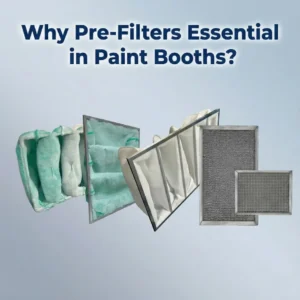
Effective management begins with understanding. A typical paint booth has a multi-stage filtration system. Intake filters (panel, bag, or ceiling filters) provide the first line of defense against external contaminants. Exhaust filters (fiberglass, paper, or multi-layer media) are specifically to capture wet paint overspray. Each type has a different role, lifespan, and indicator for replacement. Knowing what filters your booth uses and their specific functions is the first step toward a better maintenance program.
Establishing a Robust Filter Replacement Schedule
The best replacement schedule is not based on a calendar but on data. While a general guideline (e.g., every 100 spray hours for exhaust filters) is a good starting point, the most efficient method is to use a differential pressure gauge, or manometer. This device measures the difference in air pressure before and after the filter bank. As the filter loads with contaminants, the pressure difference increases. By establishing a specific “change-out” pressure reading based on the manufacturer’s recommendation, you can replace filters precisely when they are nearing the end of their effective life—not too early, which wastes money, and not too late, which compromises performance.
Best Practices for Maximizing Filter Life and Performance
To get the most out of your filtration system, adopt several best practices. Keep the area around the paint booth clean to reduce dust and debris on the intake filters. Seal the booth doors properly to prevent air from being drawn in. Regularly check and log manometer readings to track filter loading over time. Finally, use high-quality filters for your booth and application, as they provide better efficiency and last longer than cheaper options.
Conclusion: Investing in Clean Air, Investing in Your Business
The evidence is clear: ignoring paint booth filter maintenance is a costly mistake. It directly degrades the quality of your paint jobs, leading to expensive rework, wasted materials, and reputational damage. It cripples shop productivity by extending cycle times, increasing energy consumption, and causing premature equipment failure. Finally, it introduces significant safety, health, and regulatory compliance risks. The true cost isn’t just the filter price but the cumulative losses across your operation.
The Clear ROI of Proactive Filter Maintenance
For a modest cost in filters and maintenance, you gain better finish, less waste, and lower rework labor costs. A disciplined maintenance schedule yields superior finish quality, reduced material waste, and lower rework labor costs. You increase shop throughput, lower energy bills, and extend the life of your capital equipment. This is not an expense; it is a strategic investment in efficiency, quality, and profitability.
Prioritize Your Filtration System for Superior Quality, Productivity, and Profitability
Stop viewing filters as a disposable commodity and start treating them as a critical performance component. Implement a data-driven replacement schedule using pressure gauges. Train your team on the importance of clean air and proper maintenance protocols. Prioritizing your air filtration system lets you control quality, efficiency, and your bottom line. In an increasingly competitive market, clean air isn’t just a requirement—it’s your competitive advantage.
 Spray Booth Filters Near Me: Fast Shipping & Sizing
  Different Types of Air Filter Roll Material Explained
  The Best Intake Filters for Flawless High-Gloss Finishes
  What Are Pre-Filters and Why Are They Essential in Paint Booths?
  How Paint Booth Filters Help Maintain OSHA and EPA Compliance