
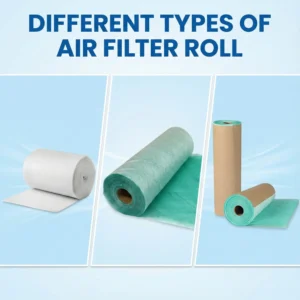
The Ultimate Guide to Air Filter Roll Materials: Types, Properties, and Uses Explained
In our modern world, the air we breathe is filled with unseen particles, from common dust and pollen to industrial pollutants and microscopic pathogens. While we often take clean air for granted, it’s the result of sophisticated technology working silently in the background. At the heart of this technology are air filters, the unsung heroes of indoor environmental quality. The global air filters market was valued at USD 16.00 billion in 2024 and is projected to grow significantly, a testament to the increasing focus on clean air as detailed by a report from Fortune Business Insights.
The Critical Role of Air Filtration in Modern Environments
Air filtration is the process of removing solid particulates, such as dust, pollen, mold, and bacteria, from the air. In residential, commercial, and industrial settings, effective filtration is crucial. It protects human health by reducing allergens and respiratory irritants, safeguards sensitive equipment from damaging particles, and ensures product quality in manufacturing environments. Without it, the efficiency of systems like HVAC units would plummet, and indoor air quality would pose significant risks.
What are Air Filter Roll Materials? Defining the Core of Filtration
Before a finished air filter is installed, its journey begins as a bulk material, often in large rolls. These air filter roll materials, also known as filter media, are the active component responsible for capturing contaminants. They are engineered textiles or fibers designed with specific properties to trap particles while allowing air to pass through. The versatility of rolls allows for custom-sized filters to be created for a vast array of applications.
Why This Guide Matters: Unlocking Optimal Air Quality and Operational Efficiency
Choosing the right filter media is not a one-size-fits-all decision. The material’s composition directly impacts filtration efficiency, airflow resistance, durability, and cost. Understanding the differences between polyester, fiberglass, and other advanced materials empowers facility managers, engineers, and homeowners to make informed choices that optimize both air quality and the operational efficiency of their air handling systems.
Understanding Air Filter Roll Materials: Beyond the Finished Product
To truly grasp air filtration, one must look beyond the framed filter and understand the core material that does the heavy lifting. This is where filter media rolls come into play, offering a foundation for countless filtration solutions.
Defining Filter Media Rolls: Versatility, Efficiency, and Customization
Filter media rolls are continuous sheets of filtration material wound into a cylindrical form. This format is ideal for manufacturers and large-scale operations because it allows for filters to be cut to any size or shape, minimizing waste and enabling customization for specific equipment, from a standard HVAC system to a highly specialized industrial machine. This adaptability makes them a cost-effective and efficient solution for diverse air filtration needs.
The Fundamental Purpose: Capturing Airborne Particles, Pollutants, and Contaminants
The primary job of any filter media is to create a physical barrier that intercepts and holds onto unwanted airborne contaminants. These can range from large dust particles visible to the naked eye to microscopic allergens, bacteria, and even gaseous pollutants like odors and volatile organic compounds (VOCs). The effectiveness of the media depends on its structure, fiber density, and sometimes, its chemical properties.
The Science of Filtration: How Roll Materials Capture Contaminants
Air filter medias employ several scientific principles to remove particles from an airflow. Understanding these mechanisms reveals how different materials are engineered for specific tasks, from capturing coarse dust to high-efficiency particulate air (HEPA) filtration.
Mechanical Filtration: Interception, Impaction, and Diffusion
This is the most common form of filtration, relying on the physical structure of the filter media. It works through three primary mechanisms:
- Interception: Occurs when a particle follows the path of the airflow and comes into direct contact with a filter fiber, adhering to it.
- Impaction: Larger, heavier particles have too much inertia to follow the curving airflow around fibers. They continue in a straight line, colliding with and sticking to a fiber.
- Diffusion: Very small particles (typically under 0.1 microns) move erratically in the air stream due to collisions with air molecules (Brownian motion). This random movement increases the probability that they will collide with a fiber and be captured.
Electrostatic Filtration: Enhancing Particle Capture with Charged Fibers
Some synthetic filter media, such as certain types of polyester, are electrostatically charged during manufacturing. This charge creates an electric field that attracts both positive and negative particles from the air, much like static electricity makes a balloon stick to a wall. This mechanism significantly boosts the capture efficiency of very small particles without increasing airflow resistance.
Adsorption: Tackling Gases, Odors, and VOCs
While mechanical filtration targets solid particles, adsorption is necessary to capture gases, odors, and VOCs. This process involves using a porous material, most commonly activated carbon, where gas molecules adhere to the vast internal surface area of the carbon. The contaminants are trapped within the carbon’s structure, effectively removing them from the air.
Combined Mechanisms: Leveraging Multi-Layer and Composite Designs
Many modern air filters use a combination of these mechanisms. A composite filter roll might feature a pre-filter layer for capturing large particles via impaction, a middle layer of electrostatically charged fibers for fine particles, and a final layer of activated carbon for odor adsorption. This multi-pronged approach provides comprehensive air filtration.
Key Types of Air Filter Roll Materials: A Deep Dive into Composition and Capabilities
The choice of material dictates a filter’s performance. Each type offers a unique balance of efficiency, durability, and cost, making it suitable for different applications.
Synthetic Filtration Media: The Modern Workhorses
Primarily made from polyester or polypropylene, synthetic media are the most versatile and widely used materials. They are known for their high durability, resistance to moisture and microbial growth, and consistent performance. Polyester filter media can be engineered to achieve various efficiency levels and can be treated with electrostatic charges to enhance the capture of fine particles, making them ideal for everything from residential HVAC filters to sophisticated industrial uses.
Fiberglass Filter Media Rolls: The Traditional Standard for High Dust Loading
Fiberglass media is constructed from fine glass fibers. It is exceptionally effective at capturing and holding large amounts of dust and debris, making it a go-to choice for pre-filters in industrial settings or as the primary filter in less demanding applications. While cost-effective, its efficiency for smaller particles is generally lower than synthetic media, and care must be taken during handling to avoid fiber shedding.
Activated Carbon Filter Rolls: Specialized for Odor and Gas Removal
These rolls consist of a synthetic or fiberglass base media impregnated with finely ground activated carbon. Their purpose is not primarily particle filtration but the adsorption of gases, chemicals, and unpleasant odors. They are essential in environments where air quality is affected by smoke, cooking fumes, chemical off-gassing, or industrial emissions.
Advanced and High-Performance Roll Materials
For critical applications like cleanrooms and hospitals, high-efficiency roll materials are required. These include micro-glass fiber media used in HEPA filters, which are designed to capture 99.97% of particles at 0.3 microns. Other advanced materials include melt-blown synthetic media and nano-fiber layers, which provide exceptional filtration efficiency for the smallest and most hazardous particles.
Understanding Performance: Key Properties and Metrics of Air Filter Roll Materials
To compare filter media objectively, standardized metrics are used to evaluate their performance in key areas.
Filtration Efficiency: Capturing Airborne Particulates and Hazardous Particles
Efficiency measures what percentage of particles of a specific size a filter can capture. A low-efficiency filter might trap large dust bunnies, while a high-efficiency filter can remove microscopic bacteria and viruses.
Minimum Efficiency Reporting Value (MERV Rating) and International Standards
The MERV rating (1-16) is the standard U.S. system for classifying filter efficiency. A higher MERV rating indicates finer filtration. For instance, a basic fiberglass filter might be MERV 4, while a high-quality polyester residential filter could be MERV 8-13. HEPA filters exceed this scale. Other international standards like ISO 16890 provide a more global framework for evaluating filter performance against specific particle size ranges (e.g., ePM1, ePM2.5).
Airflow Resistance (Pressure Drop): Balancing Efficiency and Energy Consumption
As a filter captures particles, it becomes more difficult for air to pass through, creating resistance or “pressure drop.” Higher efficiency filters typically have higher initial resistance. An excessive pressure drop forces an HVAC system to work harder, consuming more energy. The ideal filter media offers the highest possible efficiency with the lowest possible airflow resistance.
Dust Holding Capacity: Influencing Lifespan and Maintenance Cycles
This metric refers to the total amount of dust a filter can hold before it needs to be replaced. A filter with high dust holding capacity will have a longer service life, reducing maintenance costs and downtime. Materials like progressively dense fiberglass or multi-layered synthetics are designed to maximize this property.
Durability and Environmental Factors
The filter media must withstand the physical stress of airflow and be resistant to environmental factors like humidity and temperature. Synthetic materials like polyester generally offer excellent durability and moisture resistance compared to some natural fiber alternatives.
Applications of Air Filter Roll Materials: Where They Make a Critical Difference
From our homes to advanced manufacturing plants, air filter rolls are foundational to maintaining clean, safe air. The growing importance of industrial air filtration is underscored by market projections, which anticipate the sector will expand from $14.97 billion in 2024 to $16.01 billion in 2025.
HVAC Systems: The Backbone of Indoor Air Quality
In residential and commercial buildings, HVAC systems rely on filters made from polyester or fiberglass roll media to protect equipment and improve indoor air quality. Cut-to-size pads as pre-filters to extend the life of more expensive final filters.
Industrial Settings: Protecting Equipment and Workers from Air Contaminants
Factories, workshops, and processing plants generate significant airborne contaminants. Industrial air filtration systems use heavy-duty media rolls—often high-density fiberglass or durable synthetics—to capture everything from welding fumes and chemical dust to wood shavings, protecting worker health and preventing equipment failure.
Healthcare and Cleanrooms: Critical Air Quality Environments
Hospitals, pharmaceutical labs, and electronics manufacturing facilities require near-perfect air purity. These environments use high-efficiency and HEPA filters made from micro-glass fiber media to eliminate microscopic contaminants that could compromise patient safety or product integrity.
Automotive Applications: From Manufacturing to Cabin Air
Air filtration is critical in automotive paint spray booths, where synthetic media rolls capture overspray to ensure a flawless finish. Additionally, cabin air filters, often made from composite synthetic and carbon media, protect vehicle occupants from road dust, pollen, and exhaust fumes.
Air Purifiers and Specialized Filtration Units for Enhanced Air Quality
Standalone air purifiers utilize a combination of filter media to provide targeted air cleaning. They typically contain a pre-filter, an activated carbon filter for odors and gases, and a final HEPA filter for ultra-fine particles, showcasing the power of multi-stage filtration design.
Conclusion
The world of air filter roll materials is complex, but understanding the fundamentals of filtration science, material types, and performance metrics is the key to mastering it. The choice between polyester, fiberglass, activated carbon, or high-efficiency media is not merely a matter of preference but a critical decision that directly impacts air quality, energy consumption, and operational costs. By selecting the appropriate material for the specific application—whether it’s for a home HVAC system, an industrial dust collector, or a critical cleanroom—you invest in healthier environments, more efficient systems, and safer operations. As technology advances, these unseen guardians of clean air will only become more crucial in protecting our well-being and our world.
 Spray Booth Filters Near Me: Fast Shipping & Sizing
  The Best Intake Filters for Flawless High-Gloss Finishes
 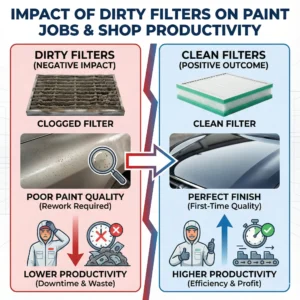 The Impact of Dirty Filters on Paint Jobs and Shop Productivity
  What Are Pre-Filters and Why Are They Essential in Paint Booths?
  How Paint Booth Filters Help Maintain OSHA and EPA Compliance