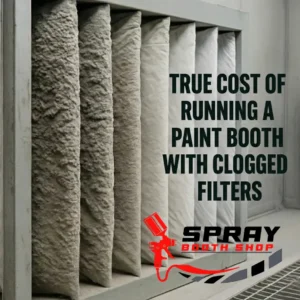
Beyond the Bill: The Hidden Financial Drain of Clogged Paint Booth Filters
For any business operating a paint booth, the invoice for new filters is a familiar, predictable expense. It’s a line item in the budget, accounted for and accepted as a cost of doing business. But this direct cost is deceptive. It masks a far more significant and insidious financial drain: the compounding costs of running a spray booth with clogged, inefficient filters. These hidden expenses don’t appear on a vendor invoice; they manifest in rising utility bills, lost production hours, costly rework, and premature equipment failure. Focusing solely on the price of the filter itself is like staring at the tip of an iceberg while ignoring the massive, profit-crushing danger lurking beneath the surface. This article will look beyond the bill to uncover the true financial impact of neglecting paint booth filter maintenance and outline a strategic approach to turn this liability into a competitive advantage.
The Immediate Erosion of Operational Performance: Before the Bill Arrives
Long before the financial consequences appear in accounting reports, the operational performance of a spray booth begins to degrade. Clogged filters initiate a cascade of failures that directly impact the quality and efficiency of the finishing process. This immediate erosion of performance is the first sign of a much larger problem.
The Silent Struggle: Airflow Restriction and Pressure Drop
A paint booth is fundamentally an engineered airflow system. Its performance depends on a consistent, controlled volume of clean air moving through the enclosure. Filters, by design, create resistance to this flow. As they capture overspray and dust, this resistance—measured as static pressure or pressure drop—increases. Clogged paint booth filters choke the system, forcing fans to struggle to pull or push the required volume of air. This reduction in airflow is the root cause of nearly every other problem, from compromised finish quality to safety hazards. The booth’s environment becomes unbalanced, creating a workspace that is no longer operating to the manufacturer’s specifications.
Compromised Paint Finish Quality and Increased Rework
When airflow is restricted, the booth can no longer effectively evacuate paint overspray and airborne contaminants. This particulate lingers in the air, eventually settling on the freshly painted surface, creating defects like dust nibs, mottling, and a hazy finish. Poor airflow from clogged exhaust filters can also lead to uneven drying and curing, further compromising the final product. The result is an immediate increase in rework. What should have been a finished product now requires time-consuming sanding, polishing, or even a complete repaint. Each rework cycle consumes additional materials, labor, and valuable booth time, directly eroding profit margins on the job.
Production Bottlenecks and Reduced Throughput
An efficient paint booth is a critical component of production throughput. Restricted airflow extends cycle times in several ways. Flash-off times between coats can increase because solvent vapors aren’t evacuated efficiently. Curing cycles may need to be lengthened to achieve proper hardness. This slowdown creates a significant bottleneck. A booth that could previously process ten jobs per day might now only handle eight. This 20% reduction in capacity means lost revenue and an inability to meet customer deadlines. The entire production schedule is disrupted, not because of a catastrophic breakdown, but due to the slow, creeping inefficiency of clogged filters.
Unmasking the Hidden Financial Drain: Quantifying the True Costs of Neglect
The operational issues caused by clogged filters translate directly into quantifiable financial losses across multiple areas of the business. These are the hidden costs that dwarf the initial price of replacement filters, turning a minor maintenance task into a major financial liability when ignored.
Skyrocketing Energy Consumption and Utility Bills
As filters load with paint and dust, the system’s fans must work harder to maintain the required airflow. For a system with a constant-speed fan, this increased effort results in a higher amperage draw, consuming significantly more electricity. For booths equipped with a Variable Frequency Drive (VFD), the system will automatically increase the fan’s speed to compensate for the pressure drop, which also leads to a steep rise in energy consumption. A seemingly minor increase in static pressure can translate into hundreds or even thousands of dollars in additional energy costs per year for a single booth, turning the filter into an unintentional and costly energy regulator.
The Exorbitant Cost of Downtime and Lost Production
Downtime comes in two forms: planned and unplanned. While changing filters requires planned downtime, ignoring them leads to much costlier unplanned shutdowns. The constant strain on fan motors and bearings can lead to premature failure, requiring emergency repairs and halting production entirely. Furthermore, the loss of throughput described earlier is a form of “soft” downtime. If a booth’s capacity is reduced by 1-2 jobs per day due to slow cycle times, the cumulative lost revenue over a year can be substantial, often reaching tens of thousands of dollars.
Material Waste, Rework, and Scrap: A Direct Hit to Profits
Every piece that requires rework represents a direct financial loss. The cost includes not only the painter’s time but also the wasted paint, clear coat, solvents, and masking materials used in the initial failed attempt. For a busy shop, even one extra rework job per day due to finish contamination can add up to over $25,000 in lost profits annually. In a manufacturing environment, parts that cannot be reworked become scrap, representing a total loss of all materials and labor invested up to the point of painting.
Accelerated Equipment Wear and Unexpected Repair Bills
Operating a paint booth against high static pressure places immense strain on its mechanical components. The fan motor, bearings, and belts are forced to operate outside their optimal range, leading to accelerated wear and tear. This not only shortens the lifespan of expensive capital equipment but also increases the likelihood of sudden, unexpected breakdowns. The repair bill for a failed fan motor or a damaged fan assembly can easily exceed the cost of a year’s worth of filters, making proactive filter replacement a sound investment in equipment preservation.
Increased Labor and Overhead Expenses
Inefficiency directly inflates labor and overhead costs. Rework requires technicians to spend time fixing mistakes rather than working on new, revenue-generating jobs. Slower production cycles mean that fixed overhead costs (like rent, utilities, and administrative salaries) are allocated across fewer units, increasing the cost per unit produced. This hidden absorption of overhead makes each job less profitable than it should be.
Regulatory Risks, Fines, and Safety Liabilities
Properly functioning filters are essential for compliance with environmental and safety regulations. Organizations like the National Fire Protection Association (NFPA) have specific standards (such as NFPA 33) that mandate regular maintenance of spray booths to prevent fire hazards. Heavily loaded exhaust filters filled with flammable overspray create a significant fire risk. Failure to maintain filters can result in hefty fines from regulatory bodies, increased insurance premiums, and, most importantly, a dangerous work environment for employees.
Strategic Filter Management: A Proactive Approach to Financial Health
Moving from a reactive to a proactive filter maintenance strategy is crucial for controlling these hidden costs. This involves understanding your system, using data to make decisions, and prioritizing quality.
Understanding Your Paint Booth’s Filtration Ecosystem
A paint booth utilizes a multi-stage system of filters. Intake filters and pre-filters capture dust and debris from incoming air, protecting the paint job. Ceiling or diffusion media provides the final stage of intake filtration for a flawless finish. In the exhaust stream, arrestors capture wet paint or powder coating overspray. Each filter has a specific role, and understanding how they work together is the first step toward effective maintenance. Neglecting pre-filters, for example, will cause the more expensive final filters to clog prematurely.
Implementing a Data-Driven Filter Replacement Schedule
The most effective way to manage filter replacement is to move from a calendar-based schedule to a performance-based one. Instead of changing filters “every month,” use a manometer or pressure gauge to monitor the pressure drop across the filter banks. Establish a baseline reading with clean filters and track the increase as they load. Manufacturers provide a recommended final pressure reading for their filters. Replacing filters when they reach this point—not before, not after—ensures you get the maximum life out of each filter without sacrificing booth performance or incurring the high costs of running a clogged system.
The Role of Quality Filters and Reputable Suppliers
While it may be tempting to purchase the cheapest filters available, this is often a false economy. High-quality filters from reputable manufacturers are designed for better efficiency, higher paint-holding capacity, and lower initial resistance. This means they last longer, protect your equipment better, and contribute to lower energy consumption over their lifespan. Partnering with a knowledgeable supplier ensures you are using the correct, most efficient filters for your specific application, whether it’s liquid paint or powder coating.
Investing in Your Future: Calculating the ROI of Smart Filtration
Adopting a strategic approach to filter management requires a shift in perspective. Filters are not just an operational expense; they are an investment in production efficiency, quality control, and financial stability.
From Expense to Investment: Shifting Perspective
When you calculate the costs of energy waste, rework, downtime, and equipment wear, the value proposition of a robust filter maintenance program becomes clear. The money spent on quality filters and the labor to monitor and replace them on a data-driven schedule is dwarfed by the savings generated. This proactive approach protects revenue, reduces operational costs, and enhances the overall profitability of your finishing operations.
A Practical Framework for Calculating Your ROI
Calculating the return on investment (ROI) of a proactive maintenance program is straightforward. Sum the quantifiable savings: reduced energy bills, the elimination of rework costs (materials and labor), and the value of increased production throughput. Then, subtract the total cost of your filtration program (quality filters plus labor for monitoring and replacement). The result is the net financial benefit. This simple calculation will almost invariably show that smart filter management pays for itself many times over.
Conclusion: Safeguarding Your Profits, One Filter at a Time
The true cost of a paint booth filter is not the price on the invoice. It is the sum of all the hidden financial drains that occur when a filter is left in service past its effective lifespan. Clogged filters silently chip away at profits by increasing energy consumption, compromising quality, slowing production, and accelerating equipment wear. By shifting from a reactive “replace when failed” mindset to a proactive, data-driven strategy, businesses can transform this liability into a powerful tool for cost control and operational excellence. Monitoring airflow and pressure, investing in quality filters, and adhering to a performance-based replacement schedule are not just maintenance tasks—they are fundamental components of a financially healthy and competitive finishing operation. Safeguarding your bottom line truly begins with safeguarding your airflow, one filter at a time.
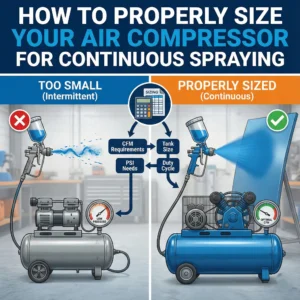 How to Properly Size Your Air Compressor for Continuous Spraying
  The Role of Exhaust Filters in Protecting Your Shop and the Environment
  Best Practices for Tracking and Scheduling Paint Booth Filter Changes
  How to Improve Shop Efficiency with the Right Paint Booth Accessories
 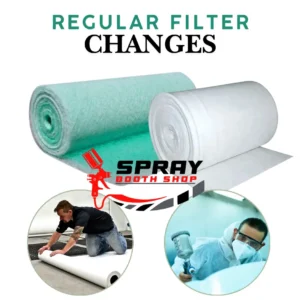 How Regular Filter Changes Save Your Shop Time and Money